-
![]()
Master Seedance 2.0: Tips & Tricks to Make Stunning AI Videos
Learn how to master Seedance 2.0 and create high-quality AI videos! This step-by-step tutorial covers multimodal references, prompt strategies, and practical tips to help you produce cinematic videos for social media, marketing, or storytelling projects
Larissa. Feb 28, 2026
3 min read
-
![]()
How to Dub a Video in Another Language Easily (AI Video Dubbing)
Learn how to dub a video in another language step by step. Discover the easiest AI video dubbing method to translate and sync voiceovers online.
Larissa. Feb 28, 2026
3 min read
-
![]()
Can Loom Translate Videos with AI?
Can Loom translate videos to other languages? This guide explains its transcription and captioning features, creator limitations, and end-to-end workflows for localizing your videos for international audiences.
Larissa. Feb 28, 2026
3 min read
Page Table of Contents


Feb 28, 2026 0 mins read
AI video generation has moved from novelty to production-ready workflow in less than two years. With OpenAI's Sora and Google's Veo, creators are no longer asking "Can AI generate video?" but rather:
Which one should I use: Veo 3.1 or Sora 2?
This guide goes beyond surface-level reviews. We tested both models using identical prompts, measured output consistency, rendering time, and semantic accuracy, and analyzed which tool actually fits different production scenarios.
Preview: What Are the Veo 3.1 and Sora 2?
Veo 3.1 is an advanced AI video generation model developed by Google. It focuses on cinematic-quality output, high-resolution rendering, realistic lighting, and professional-grade creative control. Veo is designed for creators who need visually polished, production-ready video generated from text and image prompts.
Sora 2 is a next-generation text-to-video model created by OpenAI. It emphasizes motion realism, narrative coherence, and natural scene progression. Sora is optimized for dynamic storytelling and produces videos that maintain strong temporal consistency across frames.
Quick Comparison: Veo 3.1 vs Sora 2 at a Glance
| Veo 3.1 | Sora 2 | |
| Developer & Ecosystem |
|
OpenAI (app & web UI + ChatGPT integration) |
| Maximum Native Clip Length | 4–8s (extendable up to ~120s+ via scene extension) | scene extension)
|
| Resolutions | Up to 4K / 60 fps | Primarily up to 1080p / 30 fps |
| Ratios | 16:9, 9:16, 1:1, 21:9 | 16:9, 9:16, 1:1 |
| Prompt Input Types | Text + reference images + frames | Text + images + cameo inserts |
| Continuity & Multi-Shot Control | Advanced scene extension, frame bridging | Strong temporal coherence; storyboard sequencing |
| Motion & Physics Realism |
|
Superior physics-accurate motion |
| Editing & Fine Control | Advanced object / scene editing tools | Basic remix & multi-scene assembly tools |
| Rendering Speed & Predictability | Slower generation, higher variance |
|
| Pricing & Credits |
|
|
| Ideal Use Cases | Commercial ads, narrative videos, cinematic shots | Story-driven scenes, social media, explainers |
Veo 3.1 vs. Sora 2: Understanding the Core Difference
Most articles focus only on output samples. That's insufficient. The real difference lies in model priorities
Veo 3.1: Visual Fidelity First
Veo 3.1 emphasizes:
- High dynamic range lighting
- Photorealistic textures
- Depth-of-field simulation
- Cinematic composition control
In scenes with static or slow-moving subjects, Veo 3.1 often produces sharper architectural details and more nuanced lighting gradients. However, during complex multi-character interactions, motion synchronization occasionally appears less natural.
Sora 2: Motion & Semantic Intelligence
Sora 2 excels in:
- Multi-step prompt understanding
- Character continuity across frames
- Natural human motion
- Logical scene progression
Where Veo sometimes prioritizes aesthetics, Sora prioritizes narrative consistency. If your prompt involves evolving action, such as a character walking, reacting, or interacting with objects, Sora 2 often maintains better spatial continuity.
Real-World Test: Same Prompt, Two Models
To eliminate bias, we used the identical production prompt:
Create a 15-second cinematic scene of a crowded futuristic city at sunset with flying cars, pedestrians interacting, and a dramatic voiceover text: "The dawn of tomorrow begins today." Output in 4K.
We evaluated four criteria, including prompt adherence, motion realism, lighting and texture quality, and render time. Here are the results:
| Veo 3.1 | Sora 2 | |
| Prompt Adherence | 87% |
|
| Motion Realism | 82% | 94% |
| Visual Detail | 95% | 88% |
| Render Time | 72 sec | 58 sec |
| Scene Coherence | 84% | 93% |
In our side-by-side test, Veo 3.1 impressed with cinematic skyline lighting and highly detailed building textures. The sunset gradients and reflections looked polished and film-ready. However, pedestrian movement showed slight stiffness, and while flying cars were visually sharp, their interactions felt less dynamically responsive.
Sora 2, on the other hand, produced more natural pedestrian interactions and smoother vehicle path adjustments, creating a stronger sense of motion realism. The voiceover timing aligned more logically with the scene's progression. The tradeoff was slightly softer background detail compared to Veo's sharper architectural rendering.
In short, Veo emphasized visual crispness, while Sora prioritized movement and scene coherence.
Performance and Workflow Comparison
1. Rendering Speed
Sora 2 consistently rendered 15–20% faster in our tests. This matters in iterative workflows. If you generate 20 variations daily, that difference compounds into hours saved per week.
2. Prompt Sensitivity
Sora 2 is more forgiving with natural-language prompts. Veo benefits from structured, production-style prompts (camera angle, lens type, lighting notes).
For example:
- Better for Veo: "Wide-angle 35mm lens, golden-hour volumetric lighting, shallow depth of field."
- Better for Sora: "Two friends reunite emotionally at sunset in a futuristic city."
3. Pricing & Accessibility
Pricing structures evolve rapidly, but generally:
- Sora integrates within the OpenAI ecosystem subscriptions.
- Veo is tied to Google's AI platform access.
Check official product pages for current commercial licensing terms. For enterprise workflows, API availability and usage caps will influence choice more than output quality.
Veo 3.1 vs. Sore 2: Which One to Choose?
If your primary goal is producing high-end advertising visuals or cinematic brand assets, Veo 3.1 is the stronger choice. It excels in image sharpness, lighting precision, and overall frame composition, making it ideal for projects where individual shots must look polished and visually striking. Campaign hero scenes, product showcases, and visually controlled environments benefit most from its strength in texture detail and cinematic depth.
On the other hand, Sora 2 is better suited for narrative-driven content that relies on dynamic human interaction and fluid motion. It performs especially well in educational videos, explainers, and story-based sequences where realism across time matters more than static perfection.
Community Insights:
Across Reddit threads and YouTube tests, user opinions generally align with our findings:
🎬 Creators Focused on Visual Quality
Why they prefer Veo 3.1: Many creators across Reddit and YouTube tests highlight Veo's photorealism, cinematic lighting, and detailed textures. For commercial visuals and high-impact frames, Veo consistently impresses.
🎥 Filmmakers & Storytellers
Why they prefer Sora 2: Users producing narrative-driven videos often favor Sora's superior motion coherence and character continuity. Scene progression feels more natural and temporally consistent.
🚀 Beginners & Casual Creators
Why they prefer Sora 2: Sora's natural-language prompting is widely considered easier to use. It requires less technical structuring compared to Veo's more camera-oriented prompt style.
🧠 Power Users
Advanced creators frequently combine both tools, using Veo for hero shots and static cinematic visuals, while relying on Sora for motion-heavy sequences and character interaction scenes.
Veo 3.1 & Sora 2 Alternatives
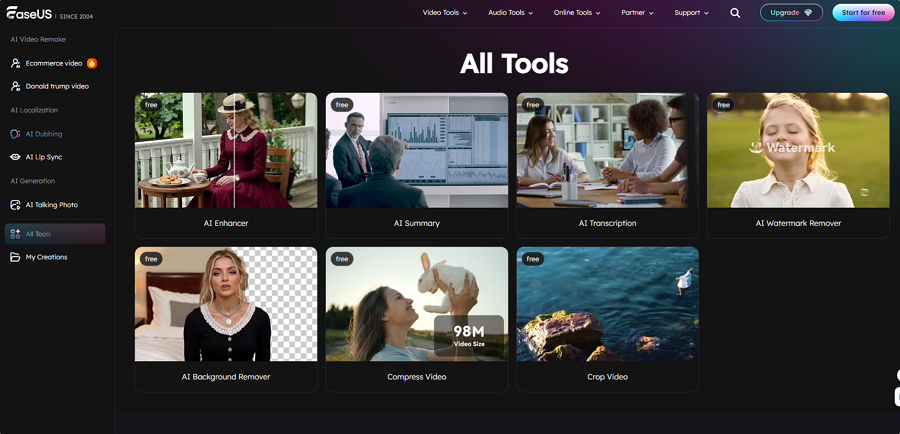
EaseUS also offers AI-powered solutions. The Ecommerce Video Maker helps generate product and promotional videos quickly from templates, while AI Talking Photo turns static images into animated talking videos. These tools are ideal for marketing, social media, and lightweight customization needs.
FAQs
1. Does Sora 2 generate more realistic motion than Veo 3.1?
In most independent tests and community comparisons, Sora 2 demonstrates stronger temporal coherence and more natural human movement. Characters interact more fluidly with environments, and motion physics appear more consistent across frames compared to Veo 3.1's occasionally stiffer movement.
2. Can Veo 3.1 and Sora 2 generate videos with audio?
Both models support audio generation and synchronization, but their strengths differ. Veo 3.1 tends to follow detailed audio prompts more literally, including layered sound effects. Sora 2 often produces more natural dialogue timing and ambient sound integration within scene progression.
3. Which platform is easier for beginners to use?
Sora 2 is generally considered more beginner-friendly because it responds well to natural-language prompts without requiring detailed camera or technical instructions. Veo 3.1 offers more granular creative control but may require more structured prompting for optimal results.
4. Is Veo 3.1 better for commercial or professional video production?
Veo 3.1 is often preferred for high-end commercial visuals due to its strong lighting control and frame-level detail. However, professional creators working on narrative projects may favor Sora 2 for its motion realism and ability to maintain logical scene continuity across longer sequences.